
Paperback vs Hardcover: Which One Is Better for Your Next Book?
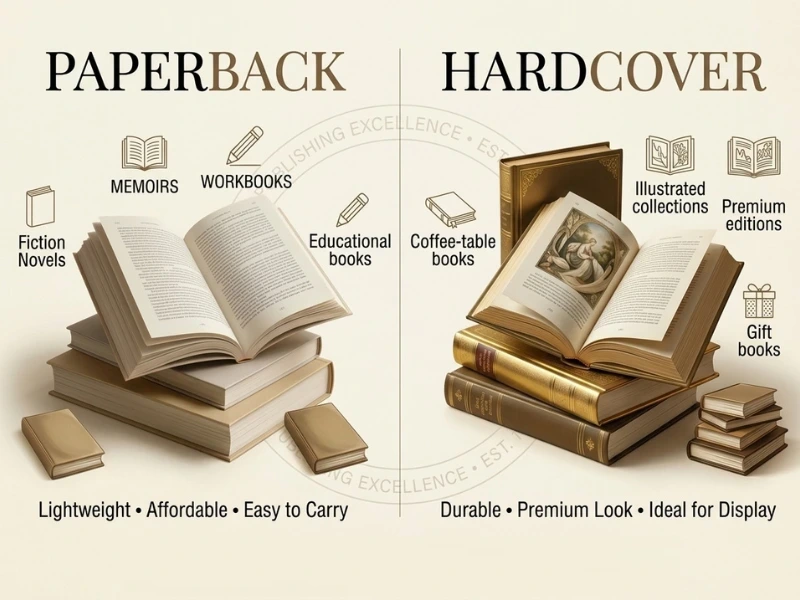
Finding the answer to paperback vs hardcover books can depend on a lot of factors. The binding influences production costs, durability, portability, shelf appeal, and even how readers use the book. Understanding the differences between paperback vs hardcover editions can help authors decide which format suits their project, budget, and audience. Keep reading to learn more about paperback book vs hardcover editions and to decide whether one format or both makes sense for the same title.
What Is a Paperback Book and What Is a Hardcover Book?
A hardcover book uses a rigid cover which is usually made from board covered with printed paper, cloth, or another material. The pages are protected by a stronger outer casing, which gives the book a more substantial feel and generally improves its resistance to everyday wear.
If you’re wondering what is hardcover book construction, the simplest explanation is that the cover is built around rigid boards rather than flexible paper stock.
On the other hand, a paperback uses a flexible cover that is usually lighter. The pages are commonly glued into the spine, although the exact binding method depends on the printer and book specifications.
Key Differences Between Paperback and Hardcover Books
So, what is paperback vs hardcover really about? The biggest differences are all about construction and the experience each format provides.
A paperback vs hardcover comparison typically involves:
- Cover: Paperbacks have flexible covers, while hardcovers use rigid boards.
- Weight: Hardcovers are generally heavier and less portable.
- Durability: Hardcover construction can withstand more handling and storage.
- Price: Paperbacks usually cost less to produce and purchase.
- Presentation: Hardcovers often create a more premium appearance.
The right choice between paperback book vs hardcover books will depend on the usage and what the author wants the finished product to communicate.
Paperback vs Hardcover: Cost, Durability, and Appearance
Production cost is often one of the first considerations when comparing a hardcover book with a paperback. Hardcover production generally requires more materials and additional manufacturing steps, which can increase the unit price.
But a custom hardcover book can offer more opportunities for visual presentation. Special finishes, foil details, dust jackets, textured materials, and other options can give certain titles a distinctive appearance.
Paperbacks have a practical advantage for readers who want something lightweight and affordable. They are easier to carry in a bag and often make sense for books intended for frequent reading rather than long-term display.
Which Book Format Is Better for Different Types of Books?
The intended audience and purpose of the book can help narrow down the choice.
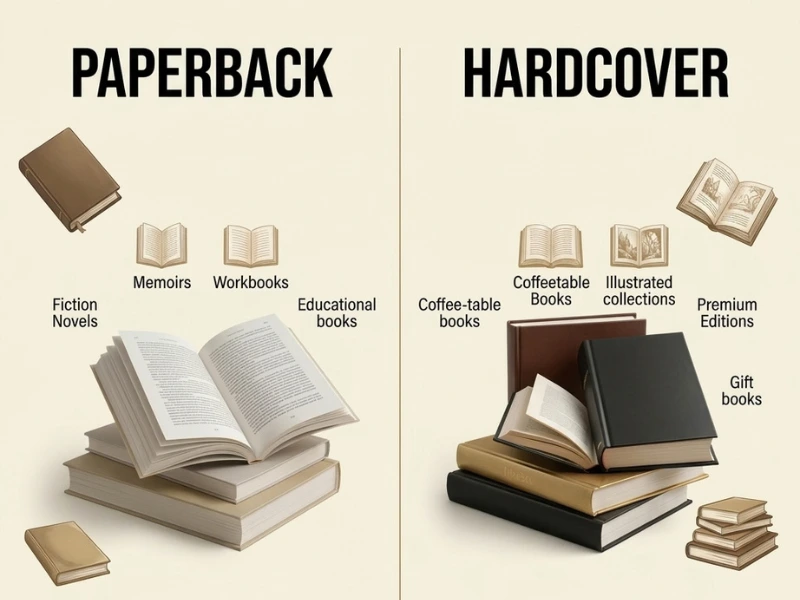
A paperback book vs hardcover decision can look different for a mass-market novel than for a photography book.
- Fiction, memoirs, workbooks, and many educational titles can work well in paperback because readers often value portability and affordability.
- A custom hardcover book may be more appropriate for coffee-table books, illustrated collections, premium editions, or books designed to be displayed.
Some authors choose both formats. A paperback can serve readers looking for a more economical edition, while a hardcover can provide a premium alternative.
Pros and Cons of Paperback and Hardcover Books
Take a look at this simple paperback vs hardcover comparison
Paperback
| Pros | Cons |
| They have a lower production cost | They are more vulnerable to bending and cover damage |
| Are lightweight and portable | Can show signs of wear sooner |
| An easier choice for everyday reading | They may have fewer premium finishing options |
| Are more affordable |
Hardcover
| Pros | Cons |
| These books have stronger physical protection | Come with a higher production cost |
| You will notice a premium shelf appearance | Are heavier to carry |
| Are suitable for special editions and gifts | May require more storage space |
| Better suited to long-term display |
The best option depends on which factors matter most for the particular book. A hardcover book may justify the additional cost for some projects, while a paperback may be the more practical choice for others.
This can make it easier for you to choose one between paperback book vs hardcover books.
How Book Size and Design Affect Your Choice
Book Sizes & Dimensions should be considered before selecting the binding because size, page count, paper stock, and cover construction all affect the finished product.
- A large illustrated book may benefit from a rigid cover that provides additional support
- Whereas a compact novel can be easier to handle as a paperback
A paperback book vs hardcover comparison should therefore include the physical design of the book rather than focusing only on the cover material.
Authors should also consider trim size, spine width, paper color, typography, images, and finishing options before sending the final files to print.
When Should You Choose Hardback Book Printing?
Hardback book printing can make sense when durability and presentation are major priorities. It is often considered for books intended as gifts and professional publications.
A hardcover book can also give an independently published title a more substantial physical presence, particularly when the cover design and finishing choices are carefully planned.
Paperback vs Hardcover- Which Format Suits Your Book Best?
Authors should consider their audience, budget, intended use, page count, design, and distribution plans when choosing between paperback vs hardcover.
- A custom hardcover book can offer greater visual impact and physical protection for a premium presentation.
- Paperback is often more practical when considering affordability and portability.
In some cases, publishing both editions gives readers a choice while allowing the same book to reach different parts of the market.
FAQs About Paperback and Hardcover Books
What is the main difference between paperback vs hardcover?
What is paperback vs hardcover is essentially a question of binding construction. A paperback has a flexible cover, while a hardcover uses a rigid outer cover made of board.
Is a hardcover book always better than a paperback?
No! Hardcover offers greater protection and a high-quality presentation, but paperback can be more affordable and easier to carry.
What is hardcover book binding used for?
If you’re asking what is hardcover book binding typically used for, it is often selected for books that require greater durability and a more premium presentation, including illustrated books, special editions, and professional publications.
Final Words
The right choice between paperback book vs hardcover books depends on your book’s purpose, audience, budget, and desired presentation. Paperback offers affordability and portability, whereas hardcover provides added durability and a more premium feel. So analyze these factors and choose the one that suits you best.